Commercial painting

Commercial painters in Melbourne

Painting commercial buildings is mostly a coordination problem. The coating matters, but what decides whether a project works is how well it is staged around the people still using the building.

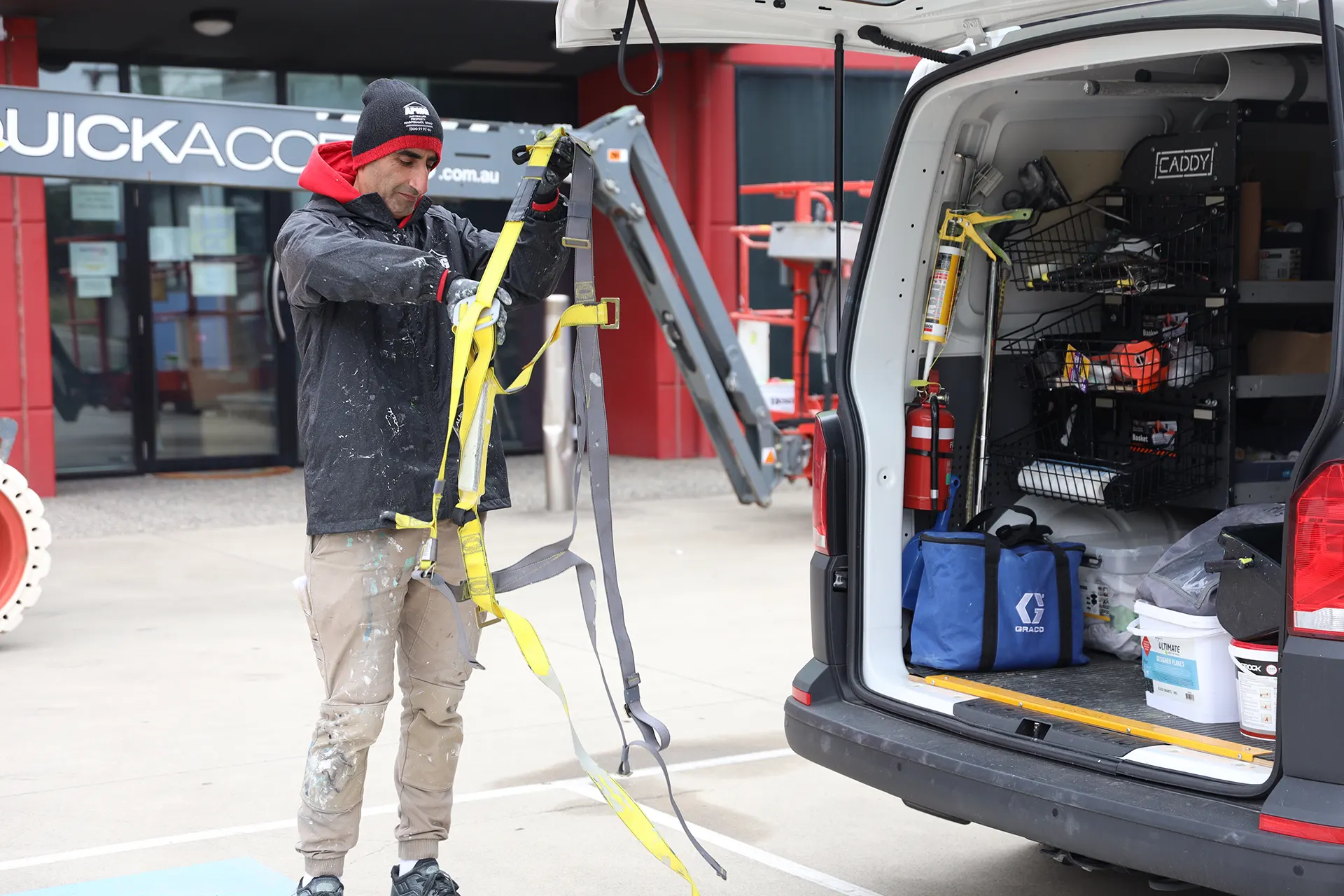
A painter working from a boom lift, harnessed, cutting the line between white and green tilt panels on a warehouse elevation

What commercial work actually involves

We deliver interior and exterior painting for commercial and industrial sites across Melbourne — from tenancy repaints and office repaints and fit-outs through to large-format building exteriors. Projects range from a two-person, two-day job through to programmes requiring boom lifts, scissor lifts, scaffolding and roof rigging.

The harder projects need surface knowledge more than they need labour. Older buildings need existing coatings identified and the substrate properly assessed before anything is specified. Preparation is matched to what we find — hot or cold power washing, steam cleaning, sandblasting, abrasion or chemical treatment where required.

Most of the sites we work on stay open throughout. That is the constraint that shapes everything else: how zones are isolated, when work happens, and how each area is handed back.

How a commercial project runs

Five stages, in order. The documentation exists before anyone picks up a brush.

  1. Stage 1

    Site assessment

    We attend site before quoting. Scope, substrate condition, access constraints and the hours we are allowed to work all get established there rather than assumed.

  2. Stage 2

    Documented scope and quotation

    An itemised quotation broken down by area, system and schedule — written so a committee, a board or a procurement lead can approve it without a second round of questions.

  3. Stage 3

    Pre-start and paperwork

    Safe Work Method Statements, insurance certificates and site-specific compliance documentation prepared in advance, with a pre-start meeting to confirm expectations.

  4. Stage 4

    Staged delivery

    Work sequenced zone by zone or after hours so the building keeps operating. Access planned per elevation — ladders, scaffolding, scissor lift or EWP as each area requires.

  5. Stage 5

    Handover

    Areas cleaned down and handed back progressively rather than all at the end, so the site regains use of each space as it is finished.

Sectors we work in

Each sector below has its own operating constraints. The pages set out what those are rather than repeating the same paint copy with a different heading.

  • Education & childcare

    Painting a school means working around a campus that never really stops. Term dates, exam periods, playground access and the presence of children all shape when work can happen and how a site is set up each day.

    1 case study

  • Healthcare

    Clinical environments set the terms. Infection control, patient movement and consulting-room availability all determine when a space can be handed over and what can be applied in it.

    1 case study

  • Aged care & retirement

    Residents live on site throughout. That makes noise, odour, dust and — above all — clear, unobstructed access routes the constraints that shape the programme.

  • Body corporate & strata

    Strata work answers to a committee, not a single decision-maker. Scopes need to be documented well enough to be approved at a meeting, and programmes need to survive contact with residents who live there.

  • Retail

    Retail work is measured against trading hours. The practical question is rarely how long the painting takes — it is how much can be completed and made presentable between close and open.

  • Hospitality

    Venues trade at the times most trades prefer to work. Programmes are built backwards from service, and finishes have to withstand cleaning regimes far harsher than a domestic interior.

  • Leisure & sports

    Leisure facilities run to a fixture list. Seasons, competitions and member access decide the window, and the surfaces involved are often large, high and heavily used.

  • Industrial & warehouse

    Industrial sites bring scale and substrate variety together: large-format exteriors, steelwork, concrete tilt panels and roof structures, usually while the facility keeps running.

    1 case study

Commercial case studies

Documented projects, including the access methods used and the constraints worked around.

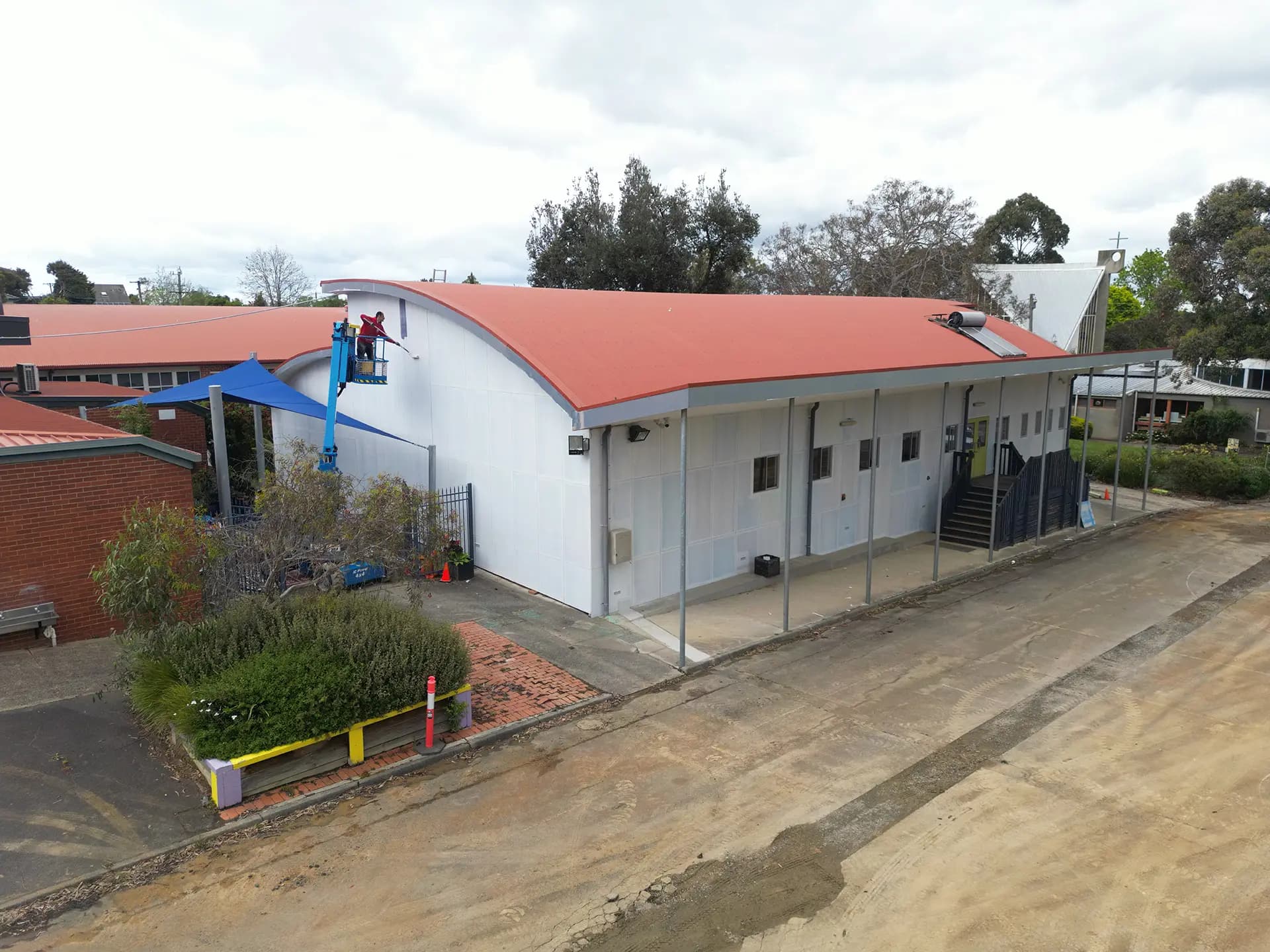
  • Repainted exterior brickwork and rendered walls at Emmaus College in Vermont

    Vermont, Victoria

    Emmaus College school repaint, Vermont

    A full interior and exterior repaint across a campus that stayed open throughout. The site had to keep running while work moved between zones, with access shared alongside an active construction site on one boundary and an operating childcare facility on another.

  • Repainted factory exterior in Noble Park showing the client’s brand colour scheme

    Noble Park, Victoria

    Factory exterior repaint, Noble Park

    A full exterior repaint of a working factory, delivered in the client’s brand colours without interrupting production or site access.

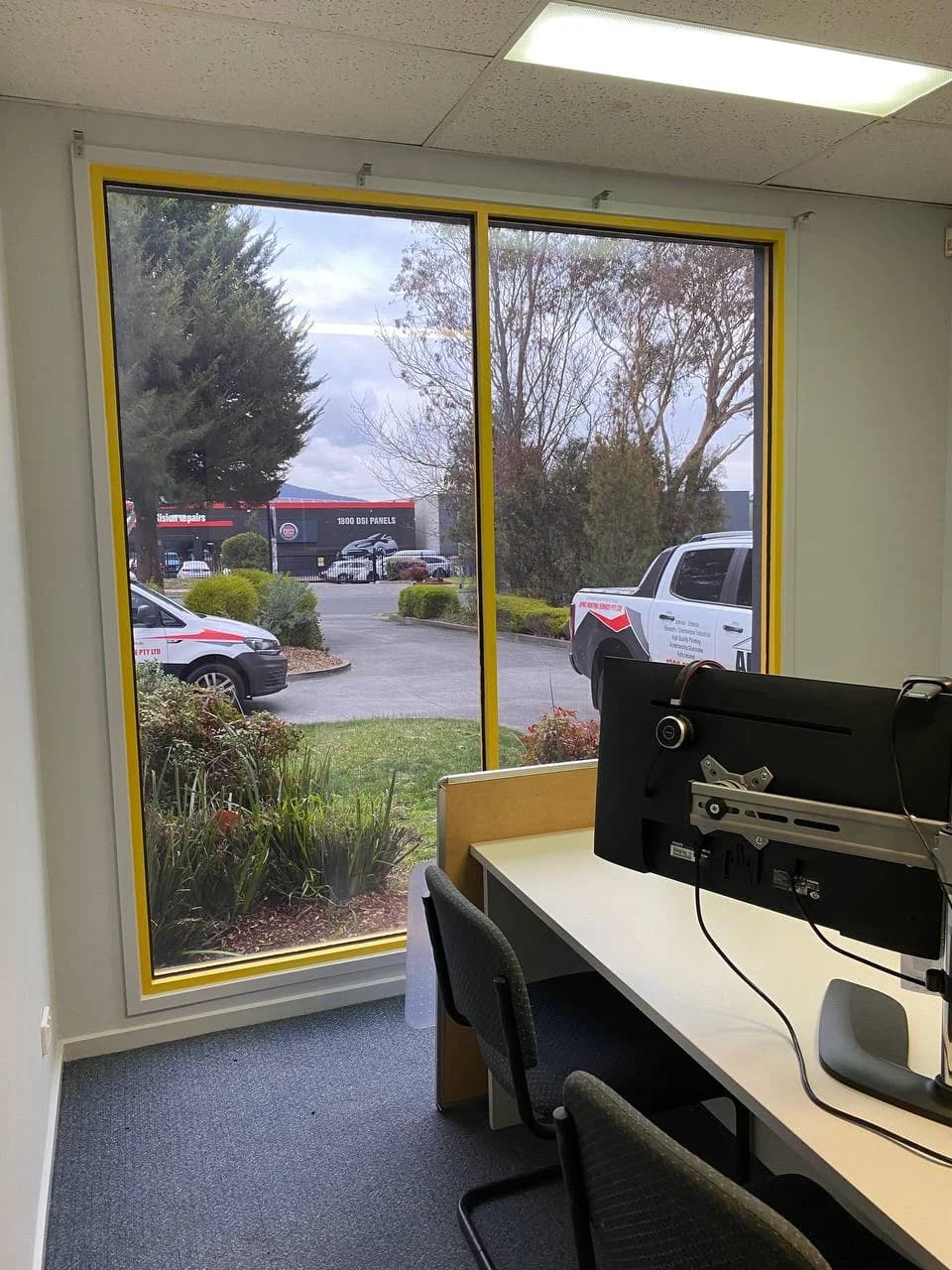
  • Repainted commercial office interior, walls and ceiling finished in white

    Across metropolitan Melbourne

    Repaint of 11 NDIS offices across Melbourne

    Repainting eleven separate office sites for one client, each an occupied workplace, under a single contract with fixed budget accountability and consistent standards across every location.

Commercial painting questions

Can you work outside our operating hours?

Yes. Most commercial programmes we run are staged around the site rather than the other way round — after hours, overnight, in term breaks, or zone by zone during the day. The repaint of eleven NDIS offices across Melbourne was largely completed outside standard business hours so staff could keep working.

What documentation do you provide before starting?

Safe Work Method Statements, insurance certificates and site-specific compliance documentation are prepared before work begins, and we hold a pre-start meeting to confirm requirements and safety expectations for each site.

Do you quote per site or per programme?

Either. For multi-site work we provide an itemised breakdown covering labour, materials and scheduling per location, so budget holders can see where the cost sits rather than receiving a single figure.

How do you handle access on multi-level or large-format buildings?

Access is planned per elevation and per area rather than site-wide. Depending on the building that means ladders, scaffolding, scissor lifts or a boom lift — often several on the same job, as on the Emmaus College campus and the Noble Park factory exterior.

Will you attend site before quoting?

For commercial work, yes. A site assessment is how scope, access constraints and operating-hours limitations get established before a number is put on the job.

Which areas of Melbourne do you cover?

We work across metropolitan Melbourne from our base at Bayswater North. If you are unsure whether your property is within range, call and ask — it is a quicker answer than a form.

Request a site assessment

Tell us the sector, the location and the hours we are allowed on site. We will come and look before quoting.